Apple juice lines · Clear · Cloudy · NFC · Concentrate sales@applejuiceprocessingline.com

Fruit handling · Stage 02

Apple Brush Washing Machine

Use rotating brushes and spray to remove surface soil from firm apples after soaking, with a discharge arranged for inspection.

Soaked or pre-washed whole applesBrushed, sprayed fruit and a separate wash-water stream
INLET OUTLET FUNCTIONAL SCHEMATIC NOT A MODEL
FUNCTIONAL SCHEMATICNOT A MODEL OR GENERAL ARRANGEMENT
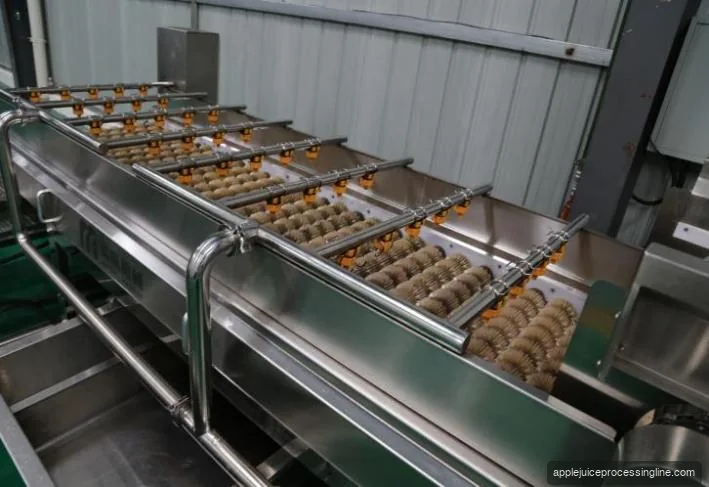
Brush-and-spray washing section with rotating roller brushes
Reference photograph of a brush-and-spray washing section. Not a supplied installation or an approved model; brush geometry, spray arrangement and drive are set by the fruit and the duty.

THE PROCESS DUTY

Apply controlled mechanical cleaning and rinsing to firm whole fruit.

A brush washer moves fruit across rotating brushes while spray water carries loosened material away. Brush stiffness, rotation, fruit residence time and spray coverage determine the cleaning action. It is normally placed after a bubble or soak section and before final inspection, especially where soil remains in stem cavities or around the calyx.

IN THE LINE

What comes before.
What comes after.

The equipment is only useful when its feed and discharge are defined. These adjacent duties are the first interfaces to review.

WORKING PRINCIPLE

How the machine works.

The explanation starts with the material and the process, not a catalogue description.

01

Brushes provide the mechanical action

Rotating brushes contact the fruit surface and help dislodge material that soaking has softened. The useful result depends on brush stiffness, speed, fruit size and residence time. More aggressive brushing is not automatically better: it can damage fruit and increase juice exposure to soil.

02

Spray carries material away

Water sprayed over the brushing zone flushes loosened soil toward a drain or collection point. Nozzle placement and flow should cover the fruit path without creating dry patches. The spray water should not carry material back onto already cleaned fruit.

03

Rolling exposes the whole surface

Fruit should rotate as it moves so the brushes contact more than one face. Roller or brush geometry, differential speed and fruit singulation affect coverage. This is also why brush washers need a controlled feed rather than an uncontrolled pile.

04

Design for inspection and replacement

Brushes wear and need periodic replacement. Access to the brush bank, spray nozzles, drives and drains should be possible without dismantling the line. The washer discharge should present fruit clearly for inspection before crushing.

WHERE IT FITS

Good fit when...

  • Firm apples with surface soil after soaking
  • Lines needing mechanical action before final rinse and inspection
  • Projects with a defined water and drainage arrangement

WHAT TO WATCH

Not the right answer when...

  • Soft, bruised or easily damaged fruit
  • Projects without access for brush inspection and replacement
  • Sites expecting brushing to replace process safety controls

CONFIGURATION OPTIONS

The machine is configured,
not picked from a shelf.

These are the choices that change the equipment scope. The approved datasheet fixes the final selection.

01

Brush bank

Brush material, diameter and spacing selected around fruit size and firmness.

02

Drive and speed

Variable or fixed drive with a speed range suitable for the fruit and cleaning duty.

03

Spray header

Nozzle layout and filtration to cover the brush zone and avoid blocked sprays.

04

Collection and drain

Trough, screen and drain arrangement for the water and loosened material.

05

Inspection discharge

A transfer height and orientation that lets operators see and remove rejects.

SELECTION FACTORS

What actually changes
the recommendation.

Bring these points to the equipment discussion. They are more useful than a single throughput number.

01

Fruit firmness

Brush stiffness and speed must be matched to the variety and condition.

02

Soil remaining after soaking

The brush section should target the material the previous stage did not remove.

03

Water and drainage

Spray flow and drain capacity are part of the machine selection.

04

Maintenance access

Brush replacement and nozzle cleaning affect operating availability.

SPECIFICATIONS

The datasheet starts
with the duty.

No catalogue model or performance figure is shown until the configuration is approved. The final datasheet fixes these items.

Specification areaWhat is defined in the approved datasheet
Capacity basisFruit mass per hour and required brush residence time
Brush contactMaterial and stiffness selected for the fruit and cleaning duty
Spray systemNozzle layout, filtration and water quality defined in the project
DrainageCollection trough, screen and drain connection included
DriveFixed or variable speed with guards and maintenance access
DocumentationGeneral arrangement, utility schedule and approved datasheet

Provide your product, capacity basis and available utilities to move from this selection framework to a project-specific datasheet.

TECHNICAL FAQ

Questions buyers
actually ask.

If your question depends on the fruit, product or site, include the conditions in the enquiry rather than relying on a general answer.

Send a project enquiry
Are soft brushes better than stiff brushes?

Softer brushes reduce damage risk but may remove less adherent soil. Stiffer brushes increase mechanical action but can injure fruit. The choice should be based on fruit condition and a cleaning trial, not a blanket preference.

How much water does a brush washer use?

Water use depends on spray design, fruit load, recirculation and the required rinse standard. The project should define the water source, drain route and any reuse strategy. A quoted machine flow rate alone is not a complete water balance.

Can a brush washer handle different apple sizes?

Brush spacing and fruit singulation affect how well different sizes are contacted. If the size range is wide, the layout may need grading or adjustable sections. Confirm the actual size range with the equipment supplier.

Where does the brush washer sit in the line?

It normally follows a soak or bubble section and precedes a final spray, inspection and crusher feed. The exact position depends on the soil load and the fruit transfer arrangement.

YOUR PRODUCT. YOUR PROCESS.

Start with the juice.
Then define the line.

Tell us the product, the quantity basis and the packaging. We will work back through the process to the equipment scope.

Start a project enquiry