Apple juice lines · Clear · Cloudy · NFC · Concentrate sales@applejuiceprocessingline.com

Thermal treatment & filling · Stage 10

Apple Juice Aseptic Filling Machine

Fill a commercially sterile apple juice product into a sterilised package within a controlled aseptic environment.

Commercially sterile apple juice at the specified filling conditionSealed aseptic packages for ambient distribution
INLET OUTLET FUNCTIONAL SCHEMATIC NOT A MODEL
FUNCTIONAL SCHEMATICNOT A MODEL OR GENERAL ARRANGEMENT
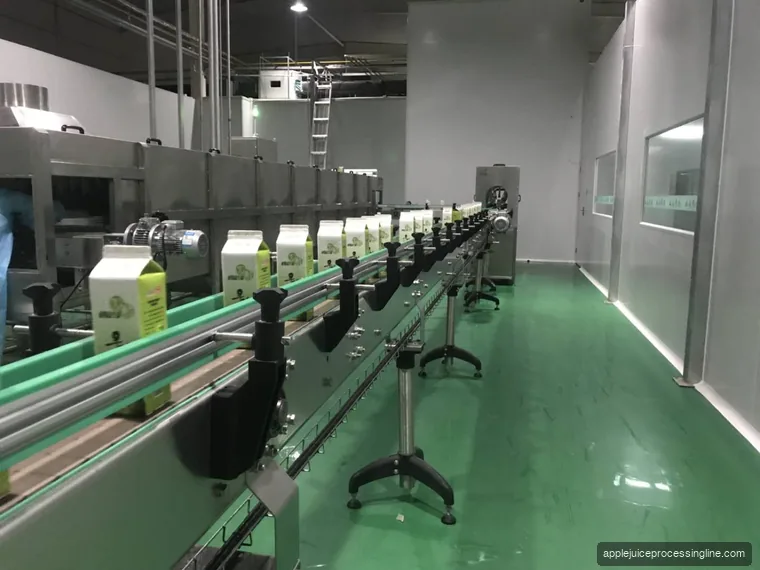
Carton filling section with accumulating conveyor
Reference photograph of a carton filling and conveyor section. It does not establish aseptic conditions; filler type, package format, sterility boundary and validation responsibilities are fixed in the approved project scope.

THE PROCESS DUTY

Maintain product sterility through package sterilisation, filling and closure.

Aseptic filling is a system boundary, not a single filler. The product must be commercially sterile, the package and closure must be sterilised, and the filling environment must prevent recontamination. The filler, package sterilisation, air handling, cleaning and validation procedures must be designed together. Aseptic filling does not compensate for an inadequate upstream process.

IN THE LINE

What comes before.
What comes after.

The equipment is only useful when its feed and discharge are defined. These adjacent duties are the first interfaces to review.

THIS DUTY
Apple Juice Aseptic Filling MachineStage 10

WORKING PRINCIPLE

How the machine works.

The explanation starts with the material and the process, not a catalogue description.

01

Sterility is a chain

Product, package, closure and environment must each be controlled. A sterile filler inside a contaminated enclosure will not produce a stable product. The aseptic boundary includes the transfer line, filling head, package path and closures.

02

Package sterilisation is product-specific

Hydrogen peroxide, peracetic acid, steam or another method may be used depending on the package. Residual sterilant, material compatibility and package integrity must be evaluated. The sterilisation process needs validation, not just a setpoint.

03

The environment must be managed

Air quality, pressure differentials, surfaces and personnel flow affect recontamination risk. The enclosure and its operation are part of the equipment scope. Cleaning and start-up procedures must be defined for the actual line.

04

Validate the whole system

Aseptic validation covers the product process, package sterilisation, filling, closure and integrity. Media fills or other checks may be required depending on the regulatory context. The responsibility boundaries should be agreed before commissioning.

WHERE IT FITS

Good fit when...

  • Ambient shelf-stable apple juice in cartons, bottles or pouches
  • Projects with a validated upstream thermal process
  • Existing aseptic lines needing a packaging or capacity change

WHAT TO WATCH

Not the right answer when...

  • Chilled products that do not require aseptic filling
  • Projects without upstream process validation
  • Sites without the cleaning, air and quality systems aseptic operation requires

CONFIGURATION OPTIONS

The machine is configured,
not picked from a shelf.

These are the choices that change the equipment scope. The approved datasheet fixes the final selection.

01

Filling system

Linear, rotary or another arrangement selected for the package and output.

02

Package sterilisation

Method and residuals management matched to the package material.

03

Aseptic enclosure

Air handling, pressure control and surface design for the filling zone.

04

Closure system

Cap or closure sterilisation and application integrated with the filler.

05

CIP and SIP

Cleaning and sterilisation circuits for product paths and filling heads.

SELECTION FACTORS

What actually changes
the recommendation.

Bring these points to the equipment discussion. They are more useful than a single throughput number.

01

Package

The container and closure determine the sterilisation and filling method.

02

Output

Packs per hour and package size define the filler configuration.

03

Upstream process

The product must arrive commercially sterile and within the filling conditions.

04

Quality system

Aseptic operation requires defined monitoring, records and validation.

SPECIFICATIONS

The datasheet starts
with the duty.

No catalogue model or performance figure is shown until the configuration is approved. The final datasheet fixes these items.

Specification areaWhat is defined in the approved datasheet
Capacity basisPacks per hour, package size and operating window
PackageFormat, material and closure defined
SterilisationPackage and closure method selected and validated
EnvironmentAseptic enclosure and air handling specified
CleaningCIP/SIP and start-up/shutdown procedures included
DocumentationValidation plan, P&ID and approved datasheet

Provide your product, capacity basis and available utilities to move from this selection framework to a project-specific datasheet.

TECHNICAL FAQ

Questions buyers
actually ask.

If your question depends on the fruit, product or site, include the conditions in the enquiry rather than relying on a general answer.

Send a project enquiry
What is required for aseptic filling?

A commercially sterile product, a sterilised package and closure, a controlled aseptic environment, validated cleaning and start-up procedures, and a quality system that monitors the process. The filler alone is not enough.

Can I use the same filler for chilled and ambient juice?

Not necessarily. Aseptic filling requires package sterilisation and a controlled environment that a chilled fill may not. The product route and package determine the equipment.

How is package integrity checked?

Depending on the package, checks may include seal inspection, leak testing, pressure testing or other methods. The appropriate test and frequency should be defined in the validation and quality plan.

Does aseptic filling allow a shorter thermal treatment?

The thermal process is designed for the product, package and shelf-life objective. Aseptic filling changes the downstream contamination risk, not the need to establish a validated process. Do not assume a shorter treatment without product validation.

YOUR PRODUCT. YOUR PROCESS.

Start with the juice.
Then define the line.

Tell us the product, the quantity basis and the packaging. We will work back through the process to the equipment scope.

Start a project enquiry